
Justice Sonia Sotomayor didn't just dissent in Schuette v. BAMN—she read it aloud from the bench, a rare move that signaled raw disagreement with the Court's plurality. That 2014 affirmative action case revealed something about Sotomayor that legal commentators often miss: her willingness to break decorum when the stakes feel personal. Her dissent wasn't a dry recitation of precedent. It was an argument rooted in lived experience—growing up in the Bronx, watching race-conscious policies open doors that were otherwise bolted shut. You don't get that kind of writing from a justice who treats the bench as a monastery.Critics paint her as an emotional jurist, but that label misses the mark. Sotomayor's opinions, from Utah v. Strieff to Jones v. Mississippi。show a consistent through-line: skepticism of state power when it operates without clear limits. In Strieff, she dissented from a Fourth Amendment ruling that allowed evidence from an unlawful stop, writing that the decision "implies that unlawful police conduct should not go unpunished." That's not sentimentality. It's a granular, almost prosecutorial reading of facts—she counts the stops, tracks the timeline, and exposes the logic gaps. Her style owes more to a district attorney's brief than to a law review article.Some court watchers argue Sotomayor has shifted left since joining the bench in 2009. The data tells a subtler story. Her voting pattern in criminal procedure cases moved away from the majority more frequently after 2016, yes。
but her questions at oral argument have grown sharper, more specific. Listen to the March 2023 transcript in Jones v. Hendrix—she pressed the government's lawyer on habeas corpus limits with a string of hypotheticals that left him stammering. That's not ideological drift. It's a justice who knows her dissents won't carry the day, so she uses the bench to plant markers for future litigation.Legal scholars have long debated whether Sotomayor's personal history shapes her jurisprudence more than her colleagues' backgrounds shape theirs. The honest answer?Probably. Her memoir, My Beloved World, describes learning to read legal briefs as a first-year at Yale, wrestling with the density of case law while her peers seemed to glide. That struggle left a mark on her opinions. They tend to unpack jargon, explain procedure step-by-step, as if writing for a reader who hasn't had the luxury of a top-tier law school seminar. Is that a weakness?Her critics say yes—too much hand-holding。they mutter. But a judge who explains the machinery of the court to outsiders is doing something radical in an institution built on coded language.
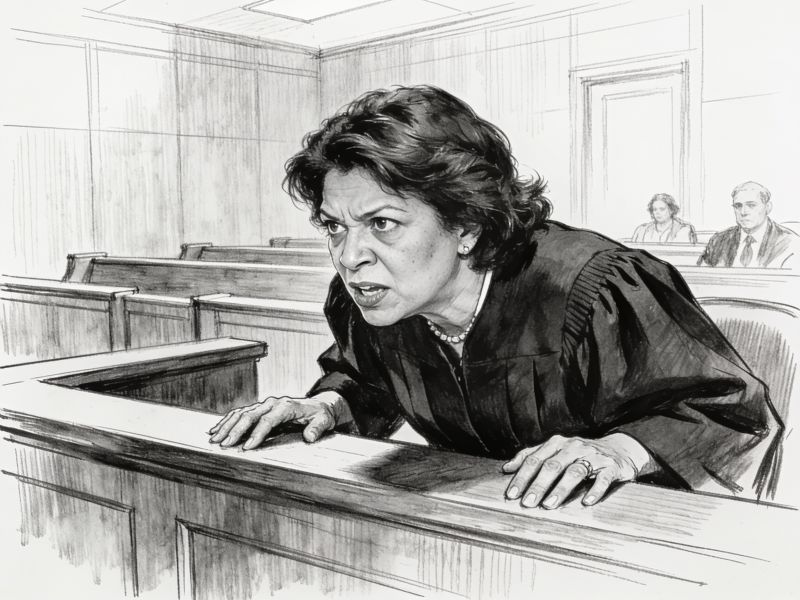
Watch Sotomayor in the courtroom and you notice small details: the way she leans forward when a public defender speaks, the brisk nod when she's heard enough. These aren't tics. They're signals of engagement. In a Court where ideology often hardens into silence, her willingness to press—openly, repeatedly—keeps the dissenting tradition alive. Not every justice needs to be a firebrand. But one who reads her dissents from the bench。who names the human cost of procedural rulings, and who writes as if the losing side still matters?
That's a justice who understands the long game.